That's right, my friends! It's that time of year. Back to School Bash 2015 begins tomorrow where we will introduce you to all of the amazing prizes and sponsors. Then you can enter to win big beginning on July 31st. This year we have over $5,000 in back to school swag! No, no...you read that right! $5,000!!! People love them some teachers y'all!
So join me and some of my blogging besties below for some amazing giveaways this week. It all begins tomorrow when we will introduce our 18 BASH BASKETS! Be sure you get yourself a head start and follow all of these amazing blogs and their instagram accounts. Believe me...this year you don't miss a thing!
I've been working on a comprehensive binder for kindergarten common core standards throughout this entire summer. It's never been so easy to meet Reading Foundations standard in Kindergarten with this easy to use resource. I'm thrilled to share my labor of love with you!
This file includes two options for binder covers and a data tracker for an evidence binder!
The Reading Foundations strand is divided into four domains: Print Concepts, Phonological Awareness, Phonics & Word Recognition, and Fluency.
Each domain includes kid friendly I can statements for reference during lessons, small groups, or data binders. You're provided with a center activity for each standard to practice in small groups or independent centers. Monitor student's ability with assessments to match each standard practiced!
This past February, I was honored to join some of my favorite bloggers and the fabulous Carson-Dellosa team for the 2015 Creative Blogger Summit to bring you a Lookbook of ideas with new and updated decor sets for designing your classroom!
Before I share my design, I want to introduce all the bloggers that participated in the design summit. I'll introduce each teacher as they're pictured from left to right. The link in their name will take you to their design. I'm linking their blogs too.
You can check out the online Lookbook by clicking here! The interactive book includes tips, top FUN'ky frog products, top Lemon Lime products, and free resources created by local teachers and the Carson-Dellosa team.
The word wall bulletin board is my favorite image of the design. I combined natural elements with the FUN'ky Frogs alphabet decor. The alphabet originally had a blue background, connecting several letters together. I decided to cut around the white frame and neon frog to allow the natural elements to pop and help align spacing! The moss border, cattails, and dock bulletin board paper were from Hobby Lobby.
Carson-Dellosa has a bright, yellow pocket chart, perfect for displaying many elements of the FUN'ky Frog decor set. I featured the calendar combining both FUN'ky Frogs and Lemon Lime for additional contrast.
The FUN'ky frog accents become a perfect way to spruce up plain drawers, label content, or hang around the classroom.
The Board Buddies mini pockets are a PERFECT size for adding tongue depressors and displaying numbers. I used the calendar dates to assign numbers for each student. Utilizing the desk for classroom management will free up wall space for student work.
When designing, I use two primary colors and one accent. Using natural elements {faux or real} makes the design feel authentic. Log pillows or stump stools with a book feel like you relaxing near a pond.
Are you ready for the best part of this post? Carson-Dellosa and I are teaming up to give one lucky teacher $100 in products from FUN'ky Frogs and Lemon Lime collections.
In 1973, Marge and Jake Michel, creators of The Mailbox Magazine, were frustrated by the lack of practical, ready to use materials for the classroom, so they began creating in their spare time. In 1979, Marge and Jake began producing The Mailbox Magazine.
Fast forward to the digital era where teachers search for access to materials on the world wide web. I remember The Mailbox Magazine surfacing early on in my career but with an online marketplace like Teacher Pay Teachers, the modern day educator, like myself, had access to materials at our fingertips. No need to visit the copy machine when I can press print. The Mailbox Magazine has modernized their format and provide digital copies of their magazine and classroom activities via The Mailbox Gold.
To gain a better understanding of the Gold Experience, I watched the two minute video below.
In my previous post, I introduced a partnership between The Mailbox and Primary Graffiti. The Mailbox team has set up various monthly challenges using their Gold Membership.
Now that The Mailbox Magazine has gone digital, I researched the resources to gain a better understanding of it's benefits. The services provided by The Mailbox Gold make this online program a valuable tool. The following two minute video provides a glimpse into the features provided by this digital format!
Now for the challenge... I was asked by the team to share back to school resources to build momentum going into a new school year.
I was pleased by the various materials provided. There are so many tools to get the teacher organized for the first day of school. I found resources for transportation, supplies, and newsletters. Content was organized by core standards, grade levels, and theme. Many resources were programable which provides the ability to edit prior to printing.
Each year, I keep Student Information Cards next to the phone in case of an emergency. In years past, I sent the cards home on the first day of school for parents to fill out and return. I usually receive most back within the first week but only after a several reminders. With the online access, the programable cards can NOW be filled out digitally on my student desktops during meet the teacher and printed prior to the first day.
The first day seems to be filled with many emotions. Both parents and students have mixed emotions. I like to provide my kids with a card and a pencil, showing my excitement for having them in my classroom. There are a variety of cards provided with the Gold Membership. You will have access to printing both color and blacklines. To add a little "POP", the blacklines can be printed on color paper!
The first day of school is all about getting to know each other and establishing rules through rituals and routines. Thinking back to workshops and trainings, most begin with an ice breaker involving interactions between participants. I found a cute activity to encourage student interactions.
My School Book is one of my favorite finds for the first day of school. The kids will begin working on speaking and listening standards as they introduce themselves to the class. This activity will provide a cute first day portfolio that can remain on display during the first month of school!
The Mailbox Gold membership provides activities from PreK through 6 grade. As I searched through the resources available, I found activities similar to those featured above. The accordion book, School is "Bear-y" Fun, could easily be used on the first day of 1st Grade!
The next activity can provide the teacher with a lot of feedback. The emergent reader provides practice with simple sentences, capital letters, and reading comprehension while reinforcing school or classroom rules.
The digital team at The Mailbox is committed to bringing everything you love about The Mailbox to a great online experience. Each of the digital resources above are available with The Mailbox Gold membership and provides teachers with meaningful activities perfect for the first day of school.
Hi Friends! I'm here tonight to share some exciting news. Over the next six months, I will be featuring a series of blog posts entitled #bethedifference!
So what is #bethedifference? Well...
In the series of blog posts, I will be featuring a new online feature by The Mailbox called The Mailbox Gold.
Each post will feature a challenge set by The Mailbox team. I will be showing you, my followers, how I use their program in my classroom! This upcoming year, I will be heading back to Kindergarten to begin another adventure looping with my darlings.
Stay tuned tomorrow. My first challenge will be to share back to school ideas to help you build momentum going into a new school year!
Click The Mailbox Gold for more details about this Gold Star Planning Experience!
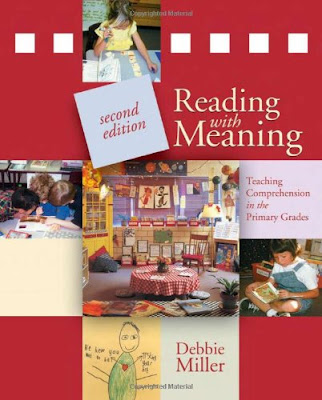
Winston Churchill once said, "I am always ready to learn although I do not always like being taught." This quote resonates with me as I dive into Reading with Meaning by Debbie Miller.
Click Image to Preview Online
My previous Professional Development (PD) provided training with most of Debbie's first chapter entitled, Guiding Principles. I was eager to learn the content presented; However, the PD hadn't provided the level of instruction to make it meaningful to me.
Debbie Miller reaches into my inner thoughts and connects with me professionally. She provides the right combination of dialogue and descriptive examples with research. It's her way of guiding you through a calm outcome in which the child learns by example that keeps me hanging on her every word.
I found this image of Debbie Miller on 1st Graders: My Toothless Wonders' blog where Debbie Miller visited her classroom earlier this year. Just look at the evidence from Reading with Meaning in action on Miss Mary Beth's walls.
As I began reading the introduction to Reading with Meaning, I was given a comparison of No Child Left Behind (NCLB) and Common Core (CC). With NCLB, comprehension was grouped with phonics, phonemic awareness, fluency, and vocabulary. Each received equal importance. CC emphasizes high level of comprehension by making meaning. This is limiting, leaving teachers to determine how to read results defined by common core.
The monthly chapters include plans for in depth teaching and learning. Included in the plans are big ideas, summative assessments, guiding questions, learning targets, and formative assessments.
In the video below, you'll hear Debbie Miller describe new thinking in Reading with Meaning.
Chapter One Summary and Reflections...
Debbie begins her chapter with the principles that guides her teaching and reading comprehension. In a nutshell, she emphasizes expectations, goals, managing time, starting with trust, and supporting responsibility of new learning from the start.
Debbie identifies with the pressure to teach programs with fidelity. She states teachers so often know in their hearts the programs required to teach go against what works best for kids. Debbie encourages teachers to find balance when presenting opposing points of view by using research and asking questions.
Also emphasized are reading workshop principles. These include time, choice, response, and community. This format allows in depth teaching and learning, flexibility, differentiation, and independence.
The traditional workshop could use a revision. The format so widely recognized includes...
Mini Lesson: 10-15 Minutes
Work Time 30-40 Minutes
Reflection/Sharing 15/20 Minutes
Why a revision? Over scaffolding diminishes student energy, engagement and motivation and increases conformity and compliance as stated in the section, Creating a Framework.
Debbie Miller states, "It's messier nurturing creativity and independence always is - but now the children are the ones digging in, figuring out, and working hard to read words and make sense of stories, content, and big ideas."
Key Point... When stamina is fading or important information has been learned, don't wait for share time or a new lesson. STOP! Bring the kids back together. Address and move forward by sending the kids with a renewed sense of purpose.
Debbie Miller provides a fisherman analogy to explain the key point above, describing teachers as fisherman and students as fish. If a fish is caught and held from water too long, what happens? If stamina is fading, all the fish need to be caught and gathered collectively for a teacher talk to show or remind students of the task before throwing them back into the water. Fish need more time swimming and less time out of the water to target learning effectively.
Developing the workshop will take 4-5 weeks for students to reach the full 60-90 minute block of instruction. Patience and persistence will be needed.
When planning, focus on content standards and the skills/strategies children need to actively engage with content, construct meaning, and grow their understanding of the big idea.
Debbie describes her previous answer when asked what she was teaching. She responded, "Inferring" or "Synthesizing" or "Asking Questions". Looking back, Debbie is surprised someone didn't ask, "What are you synthesizing or inferring about?" Now when asked, Debbie responds, "We're synthesizing our learning about life cycles." OR, "We're building background knowledge of people around the world." The power in our understanding will drive the student's understanding!
The use of essential questions have guided my lessons for years, but when I look back 10 years ago and I used the strategy as an answer for my instructional focus, too. I'm certain that came from years of using a basal.
When planning instruction, ask yourself questions like:
What essential questions will guide us to our big understandings?
What are our long term goals?
What skills and strategies will children use?
How will kids demonstrate understanding?
How much time do I have? How many days?
The process seems daunting. It's not! Think about the big picture, determine the outcome, and ask the above questions. Daily planning happens backwards from this point. Once you know what to teach, think how you will teach it. This is widely known as Understanding by Design (UbD).
Benjamin Franklin was quoted saying, "Tell me and I forget. Teach me and I remember. Involve me and I learn." This sums up why we use the Gradual Release of Responsibility!
The above graphics shows The Gradual Release of Responsibility Model. I've taught under this model for several years and speak of this model when implementing my interactive journals.
In Reading with Meaning, Debbie has the reader make connections to their own learning about various topics. For instance, how to canoe, play golf, or drive a car. She says, "If you watched somebody do it first, practiced under that person's watchful eye, listened to his or her feedback, and then one fine day went off and did it by yourself, adding your own special twist to it in the process, you know what this model is about." She really has a way with words!
In the video below, you will hear professor Jeffrey Wilhelm, of Boise State University, discuss The Gradual Release of Responsibility. This three minute video gives background similar to that shown in the graphic above!
One point that resurfaces several times in Reading with Meaning is that Gradual Release of Responsibility isn't linear. We can begin with guided practice to quickly learn where the children are and then model our explicit teaching.
Teachers need to be flexible in their learning. David Pearson is repeatedly sourced in Making Meaning. One of the most profound comparisons came with Gradual Release entitled the "Goldilocks" phenomenon. We want balance in releasing responsibility: not too much, not too little, but just the right amount. Needless to say, we should demo less and provide enough scaffolding for students to perform.
The next video is a real treat! Marten Frazier, a 5th grade teacher from Citizens Academy Charter School in Cleveland, uses Gradual Release with his students. When you watch his lesson progress, you can see the power in releasing responsibility.
When you hear about culture and climate for thinking, what comes to mind? As Debbie points out, creating a culture and climate for thinking is more than the design, promise to each other, or portraits and photographs hung around the room. It's real communities that go beyond the design and includes the voice of students.
Culture and climate is achieved by forming genuine relationships and mutual trust is established. Building relationships comes when you teach children how to listen and respond to each other in a respectful, thoughtful way. This can help foster new relationships and caring communities.
Modeling how to take interest and ask questions will help build relationships. Share how you are paying attention to the little things: haircuts, clothes, discussions AND how to ask questions about recitals, family visits, or new additions to the family. Each of these go a long way to building trust.
Debbie emphasizes the power of small moments by giving a rock to a student to add to their collection or writing a poem about cats for a little one that loves the feline variety. Tapping into what drives a student will help the bond between student and teacher flourish.
The best opportunity to show kids expectations, like listening respectfully, happens when you acknowledge and give immediate feedback. Ask the students why it's important. Use their words in combination with your own to explain. Once students understand what you want them to do and why it's important, the expectation becomes habit.
Debbie miller gives a few teachable moments and how to approach the topic with a gentle reminder!
Click image for teachable moments.
I'm overjoyed to share this experience with you! I will be back to share more on the following chapters. It's my goal to share these experiences as they are implemented with the kids throughout the year, providing meaningful images of plans in action. I encourage you to pick up the book, read, implement, and share any reflections you may have.